


Gaia Hypothesis and Daisy world.
- 8 hours ago
- 2 min read
Daisy world.
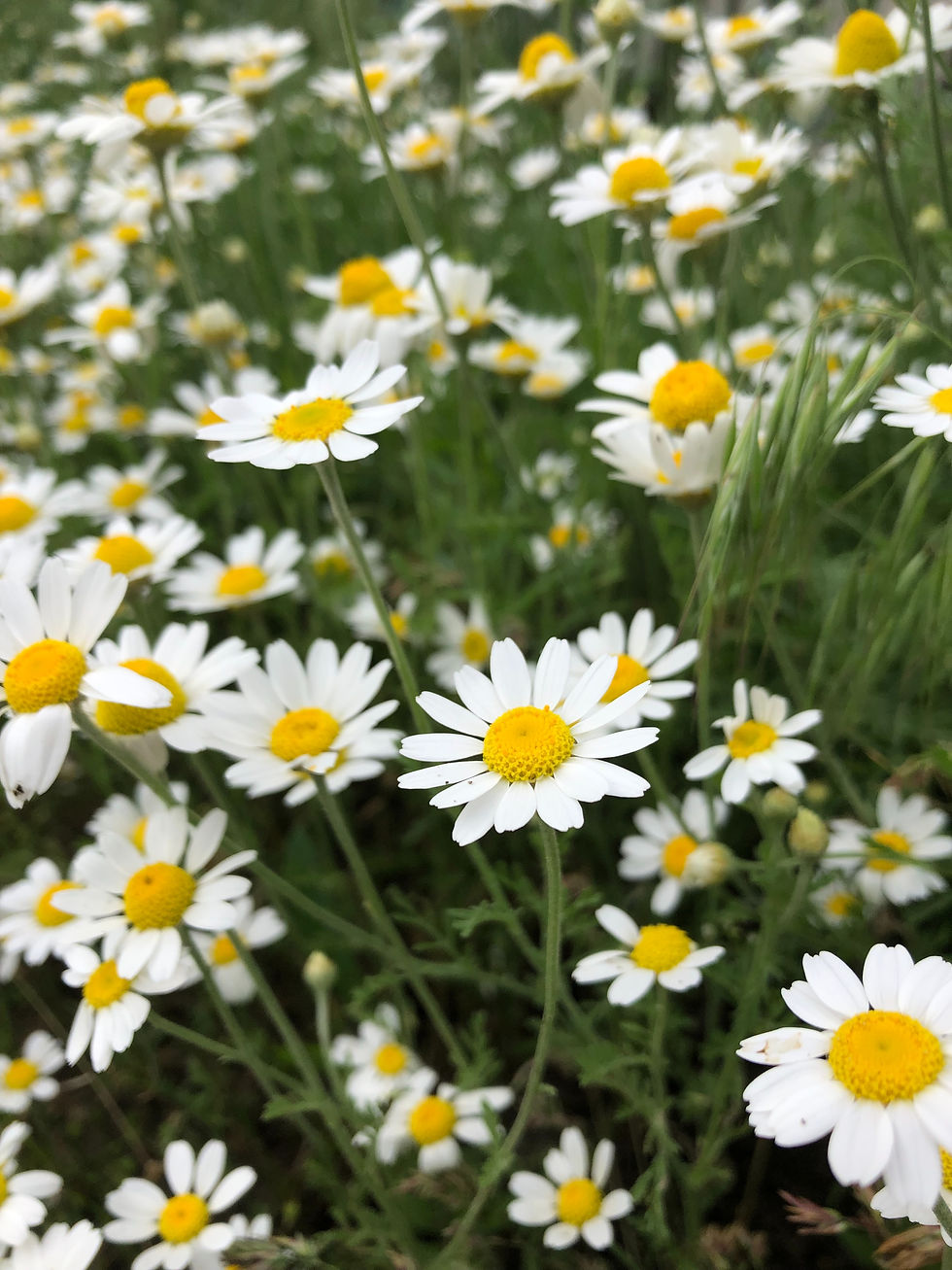
Imagine a world with only black and white daisies. Black absorbs heat and cool down atmosphere, and White emit heat and makes it hot. And if only these conditions govern the temperature of the earth, the daisies will regulate the atmospheric temperature like a warm-blooded animal regulate their body heat with similar feedback loops. Can we apply this principle to the biosphere of our world and see it regulate the condition of the earth by maintaining its atmospheric and ground conditions? Does earth's biosphere act like a gigantic warm-blooded organism? This fundamentally is the "strong Gaia" hypothesis.
"Weak Gaia" hypotheses merely agree to the fact that there are negative feedback loops in biosphere to regulate earth's condition. Not necessarily considered as a single organism.
Gaia hypothesis definition
The Gaia hypothesis, proposed by James Lovelock (with contributions from Lynn Margulis), suggests:
The Earth behaves like a self-regulating system
Living organisms (plants, microbes, animals) interact with the atmosphere, oceans, and soil
These interactions help maintain stable conditions (temperature, oxygen levels, pH) suitable for life
Example: Plants absorb CO₂ and release O₂, helping regulate atmospheric composition.
The hypothesis attracts different Individuals for different reasons. For mindfulness enthusiasts like me it shows some interconnectedness of animals and elements of earth. Similarly, the concept itself changes the thinking pattern of biologists, chemists and environmentalists. It seems like although we tend to separate individually or as a species, yet at a much bigger scale we are connected to other plants and animals and what happens to them. Imagine a world with only either black or white daisies. The planet would inevitably become too hot to live or be frozen in an ice age.
Significance of Gaia hypothesis and Daisy world.
Yet I can agree that one with a strong scientific background cannot reconcile to the fact the biosphere functioning as a single organism as Gaia hypothesis and daisy world example suggest. It seems too mystical in scientific eyes. It might sound like merging science with fiction. My own mind is divided between these two views as well. When we consider mass extinctions and ice ages, which had happened, against the biosphere's resistance mechanisms, the earth seems holding a harsh grudge against all of us living. More like there is no particular control command system. But the hypothesis itself doesn't ask for intention or free will. It merely talks about these feedback loops which keep the earth atmosphere constant and stable for life (Weak Gaia). As long as possible, as long as it is. Until it is disturbed by Alien forces like gigantic asteroids from outer space.
Maybe it is time for me to plant some trees, spare some animals and quit burning fossil fuel, and let the trees do the work before they are too exhausted from too much toxicity I created. Some daisies in my garden perhaps recycle the CO2 I made during all winter by the end of this spring.


Comments